
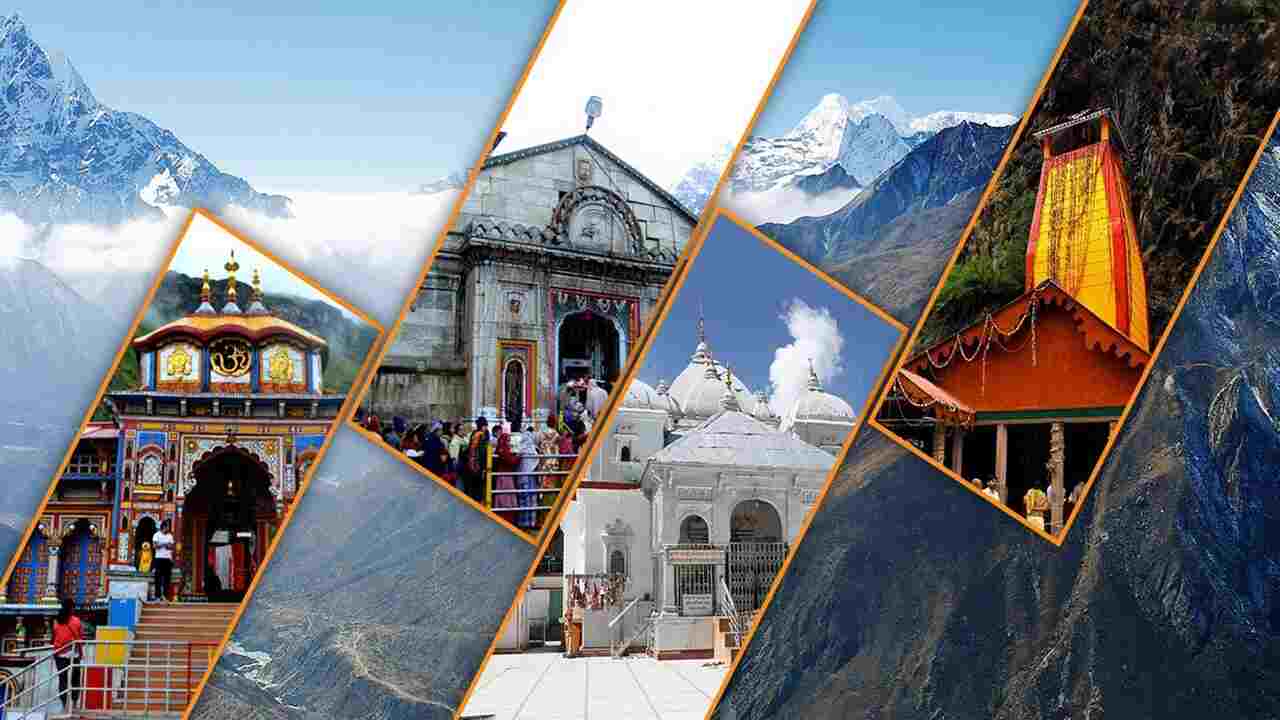
Dehradun: A big update has come out regarding the Char Dham Yatra. The date for closing the doors of the four Dhams in Uttarakhand has been decided. According to the information, the doors of Badrinath Dham will be closed on November 17, while the doors of Kedarnath Dham will be closed on November 3 itself. The doors of Yamunotri Dham will also be closed on November 3 and the doors of Gangotri Dham on November 2. So far 40 lakh pilgrims have visited the four Dhams.
There was a ban on making reels
Recently, the Uttarakhand government took an important decision and completely banned making reels or videography for social media within a radius of 50 meters of the temple premises in all the four Dhams. Uttarakhand Chief Secretary Radha Raturi had issued an order banning the making of videos and reels within a radius of 50 meters of the four Dham temples. However, the officials had clarified that there is no restriction on carrying mobile phones during the journey.
Importance of Kedarnath
Kedarnath is a holy shrine of Lord Shiva in Rudraprayag district of Uttarakhand. Every year lakhs of people come here for darshan. Kedarnath is also counted among the twelve Jyotirlingas and Panch Kedars of Lord Shiva. The Shivlinga installed in the Kedarnath temple is self-manifested. Due to this, the importance of the temple increases more.
Importance of Badrinath
Badrinath is considered to be one of the four major shrines. It is located on the banks of the Alaknanda River in the Himalayan mountain range. It is mainly a temple of Lord Vishnu. Nar and Narayan are worshipped here. This temple is divided into three parts – Garbhagriha, Darshan Mandap and Sabha Mandap. There are 15 idols in the Badrinath temple complex, the most prominent of which is the idol of Lord Vishnu.