

Dehradun: Uttarakhand has achieved a significant milestone in the renewable energy sector, bringing the state’s installed solar power capacity to over 1 GW (1000 MW). According to the latest data, the state’s total installed solar capacity has exceeded approximately 1027.87 MW, reflecting the state’s commitment to clean and green energy.
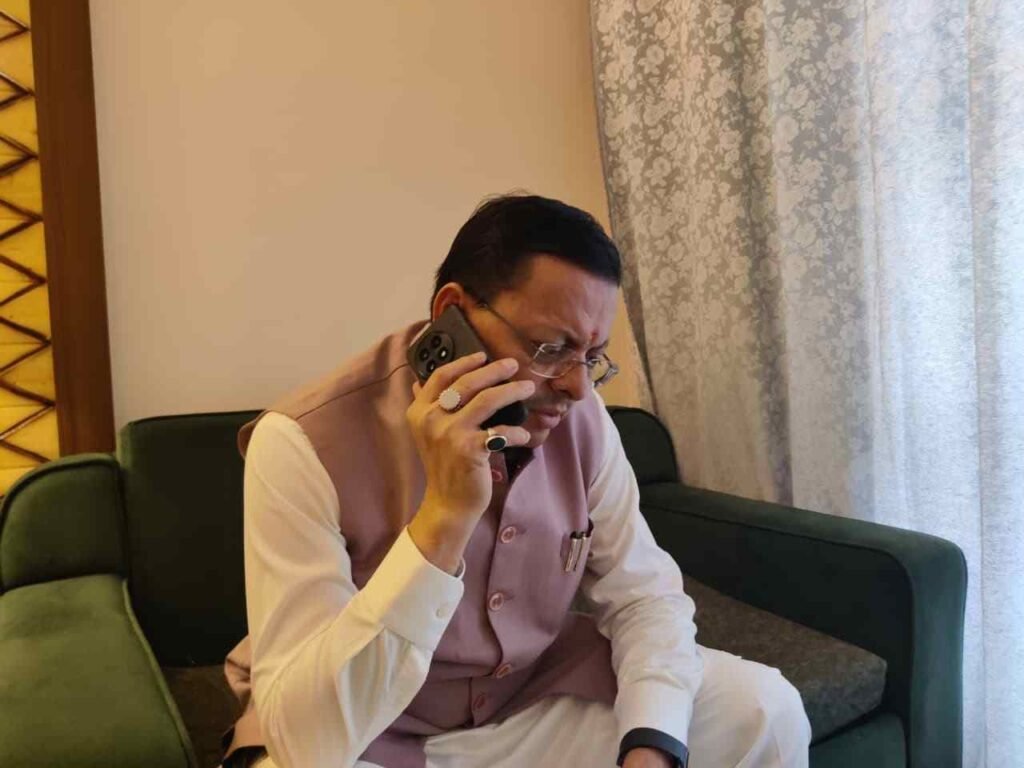
Chief Minister Pushkar Singh Dhami, on the state’s solar power capacity surpassing 1 GW, said that this achievement is a result of Prime Minister Narendra Modi’s visionary leadership and his clear policy towards renewable energy. The Chief Minister said that inspired by Prime Minister Modi’s vision of a “self-reliant India” and green energy, solar energy has been transformed into a mass movement in Uttarakhand. Through the coordination of central government schemes and proactive initiatives by the state government, thousands of youth and local entrepreneurs have gained new self-employment opportunities. He expressed confidence that under Prime Minister Modi’s guidance, Uttarakhand will further strengthen its position as one of the leading states in the country in the field of green energy.
This achievement has been made possible through various schemes and initiatives, including grid-connected rooftop solar projects, ground-mounted solar plants, solar plants on government buildings, solar pumps for the agricultural sector, solar schemes for domestic consumers, and the commercial and industrial sectors.
These include 397 MW ground-mounted solar power plants, 241 MW rooftop solar power plants (PM Surya Ghar), 137 MW Chief Minister Solar Self-Employment Scheme, 110 MW commercial net metering, 51 MW captive solar power plants, 37 MW canal-top and canal-bank solar power plants, and 26 MW solar power plants on government buildings. Currently, under the Chief Minister’s Solar Self-Employment Scheme, plants with a capacity of over 100 MW, 30 MW of captive solar power plants, and 13.5 MW of solar power plants on government buildings are being installed. These efforts have not only increased clean energy production but also reduced carbon emissions, promoted energy self-sufficiency, and local employment generation.
The Uttarakhand Renewable Energy Development Agency (UREDA) has played a significant role in this historic achievement. UREDA has played a leading role in the implementation of solar energy projects in the state, public awareness, technical guidance, and effective implementation of various government schemes. Continuous efforts to bring solar energy solutions to remote and mountainous areas have made this achievement possible.
Initiatives such as a favorable policy environment, subsidy provisions, simplified approval processes, and encouragement of private investment have also yielded positive results in promoting solar energy in the state. Uttarakhand is rapidly strengthening its position as one of the leading solar energy states in the country.
The government aims to further expand solar energy capacity in the future, encourage solar solutions in remote areas, and increase citizen participation. This achievement is a strong step towards sustainable development, environmental protection, and energy security.