
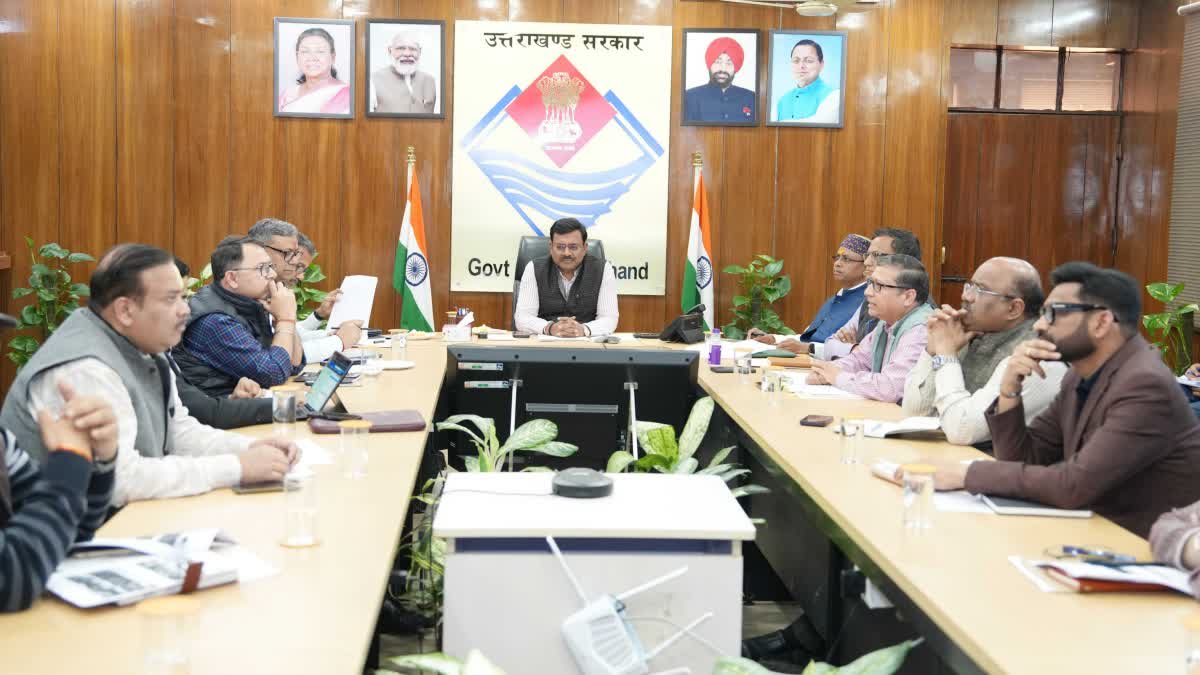
Dehradun: The Uttarakhand government has taken a major step to address forest conservation, soil and water conservation, and human-wildlife conflict in the state. In the 12th meeting of the CAMPA Steering Committee, an annual action plan of ₹339 crore for the financial year 2026–27 was approved. The meeting was chaired by Chief Secretary Anand Bardhan.
Several key decisions were taken to strengthen forest conservation, rejuvenate water sources, prevent soil erosion, control forest fires, and reduce human-wildlife conflict. Officials were directed to ensure transparent, high-quality, and timely utilization of the approved budget.
The Chief Secretary instructed the Forest Department to identify one major and impactful soil and water conservation project in each forest division. These projects will prioritize water conservation, land improvement, community participation, and ecological balance to help control issues such as water scarcity and landslides in hilly areas.
It was also decided that, by strengthening inter-departmental coordination, at least three major integrated projects at the state level would be proposed for water conservation. Emphasis was also laid on conducting third-party audits to ensure the quality of works undertaken under CAMPA.
Considering the issue of human-wildlife conflict, transit rescue centers will be established in all districts of the state. Under the current action plan, ₹19 crore has been approved for setting up 10 new rescue centers. Additionally, proposals worth ₹8.6 crore for conflict mitigation measures have also been approved.
To improve facilities for Forest Department staff, ₹10 crore has been sanctioned for the construction of residential buildings for ranger-level officers and employees in Dehradun and Haldwani.
To control forest fires that occur annually in the state, ₹12 crore has been approved under CAMPA, including ₹2 crore as special assistance for Van Panchayats. Moreover, a proposal worth ₹19.5 crore has been approved for the treatment and rejuvenation of water streams.
Through these schemes, significant steps will be taken toward environmental conservation, rejuvenation of water sources, and reducing human-wildlife conflict in the state.