
Lucknow: In a major political and administrative reshuffle, the Yogi government in Uttar Pradesh has extensively revised the district responsibilities of ministers. Under the newly issued list, Cabinet Ministers and Ministers of State have been assigned charge of new districts.
Several newly inducted faces in the Council of Ministers have also been entrusted with important districts. Political observers are linking this move to the government’s preparations for the upcoming Assembly elections.
According to the government order, Finance Minister Suresh Kumar Khanna has been assigned charge of Lucknow and Varanasi districts. Agriculture Minister Surya Pratap Shahi will now oversee Ayodhya and Basti districts, while Water Resources Minister Swatantra Dev Singh has been made in charge of Prayagraj and Gorakhpur.
New Districts Assigned to Cabinet Ministers
Under the new arrangement, Baby Rani Maurya has been given charge of Etawah and Hathras, Laxmi Narayan Chaudhary of Aligarh and Firozabad, Jaiveer Singh of Jhansi and Farrukhabad, and Dharampal Singh of Ghaziabad and Rampur.
Nand Gopal Gupta ‘Nandi’ has been assigned Mirzapur and Chitrakoot, Anil Rajbhar Azamgarh and Siddharthnagar, Rakesh Sachan Rae Bareli and Kannauj, and Arvind Kumar Sharma Jaunpur and Bhadohi.
Additionally, Yogendra Upadhyay has been given charge of Kanpur Nagar, Ashish Patel of Gonda, Sanjay Nishad of Kanpur Dehat, Om Prakash Rajbhar of Ambedkar Nagar, Dara Singh Chauhan of Kushinagar and Shravasti, Sunil Kumar Sharma of Saharanpur, and Anil Kumar of Moradabad district.
CM and Deputy CMs to Monitor 25 Districts Each
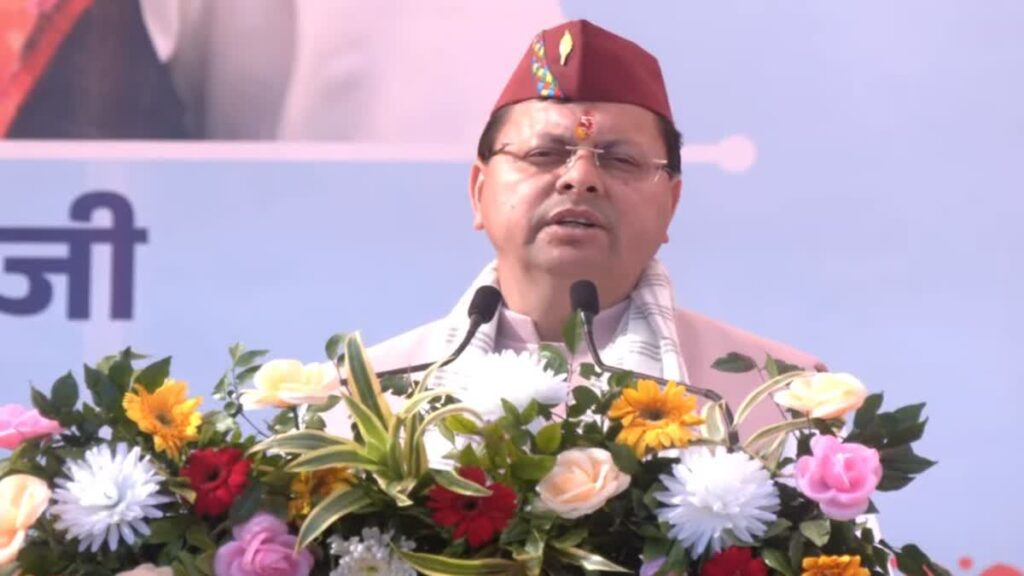
Under the revised arrangement, Chief Minister Yogi Adityanath and both Deputy Chief Ministers have been assigned the responsibility of monitoring and coordinating 25 districts each. Ministers will be responsible for reviewing development works, ensuring effective implementation of government schemes, and maintaining organizational coordination in their respective districts.
Ministers of State Also Given Key Responsibilities
Minister of State Nitin Agarwal has been assigned Lakhimpur Kheri, Kapil Dev Agarwal Bijnor, Ravindra Jaiswal Ghazipur, Sandeep Singh Mathura, and Gulab Devi Amroha district.
Girish Chandra Yadav has been given charge of Sultanpur, Dharmveer Prajapati of Mainpuri, Aseem Arun of Hardoi and Meerut, and JPS Rathore of Sambhal and Bareilly.
Similarly, Narendra Kumar Kashyap has been assigned Shahjahanpur, Dayashankar Singh Deoria and Mau, Dinesh Pratap Singh Banda and Bahraich, Arun Kumar Saxena Badaun, and Dayashankar Mishra ‘Dayalu’ Ballia and Maharajganj districts.
Focus on Social and Caste Equations
The government’s decision is also being viewed through the lens of social and caste equations. Political analysts believe that several ministers have been assigned districts where their respective communities hold significant influence. The move is being seen as part of a broader strategy to strengthen political outreach among various social groups ahead of the Assembly elections.
In this context, Minister of State Kailash Rajput has been made in charge of Etah district, where the Lodh community is considered influential. Similarly, Krishna Paswan has been assigned Kaushambi, where the Pasi community has a significant presence. Minister Surendra Diler, who belongs to the Valmiki community, has been given charge of Bulandshahr. Political observers view these assignments as an attempt to balance social equations in key regions.
Changes in Existing District Responsibilities
The government has also revised several previous district assignments. Agriculture Minister Surya Pratap Shahi earlier held charge of Ayodhya and Bahraich, but Bahraich has now been replaced with Basti.
Likewise, charge of Kasganj has been withdrawn from Laxmi Narayan Chaudhary and handed over to BJP state president Bhupendra Chaudhary. Laxmi Narayan Chaudhary has instead been assigned Firozabad district.
It is noteworthy that district responsibilities were previously reshuffled in September 2024 following the Lok Sabha elections. This latest reorganization is being viewed as a significant step towards strengthening administrative efficiency, organizational coordination, and electoral preparedness ahead of the next Assembly elections.