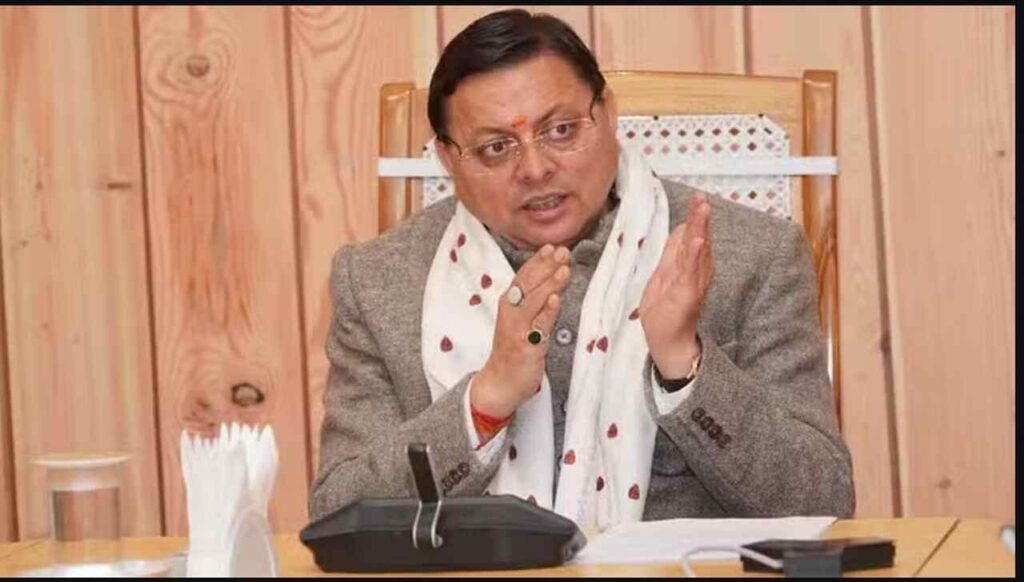

Dehradun: Chief Minister Pushkar Singh Dhami said the state government’s goal is to transform Uttarakhand into a fully developed state by 2035, adding that the government is delivering tangible results rather than making mere announcements. He claimed that the state’s GSDP has grown by 7.23 percent, per capita income has increased by 41 percent, and the state budget has crossed ₹1 lakh crore.
Addressing a programme at IDPL on Saturday, the Chief Minister said that basic infrastructure—including roads, education, healthcare, and drinking water—is being rapidly expanded in border and remote areas. To increase farmers’ incomes, the government is promoting beekeeping, modern horticulture, aromatic plants, floriculture, and other allied activities alongside traditional farming.
He said that to create employment opportunities at the local level, the government has introduced a new Startup Policy, the One District One Product (ODOP) initiative, the Homestay Scheme, and the Solar Self-Employment Scheme. The government’s objective, he said, is to transform young people from job seekers into job creators.
Highlighting women’s empowerment, the Chief Minister said that women have been granted 30 percent horizontal reservation in government jobs, while various welfare programmes are helping them become financially independent. He stated that 2.65 lakh women have already become ‘Lakhpati Didis’ under government initiatives.
The Chief Minister also claimed that investment worth more than ₹1 lakh crore has already materialised in the state. He said the Char Dham Yatra continues to set new records, with over 4.36 million pilgrims visiting the shrines in just two months this year, while more than 55,000 pilgrims have undertaken the Adi Kailash Yatra.
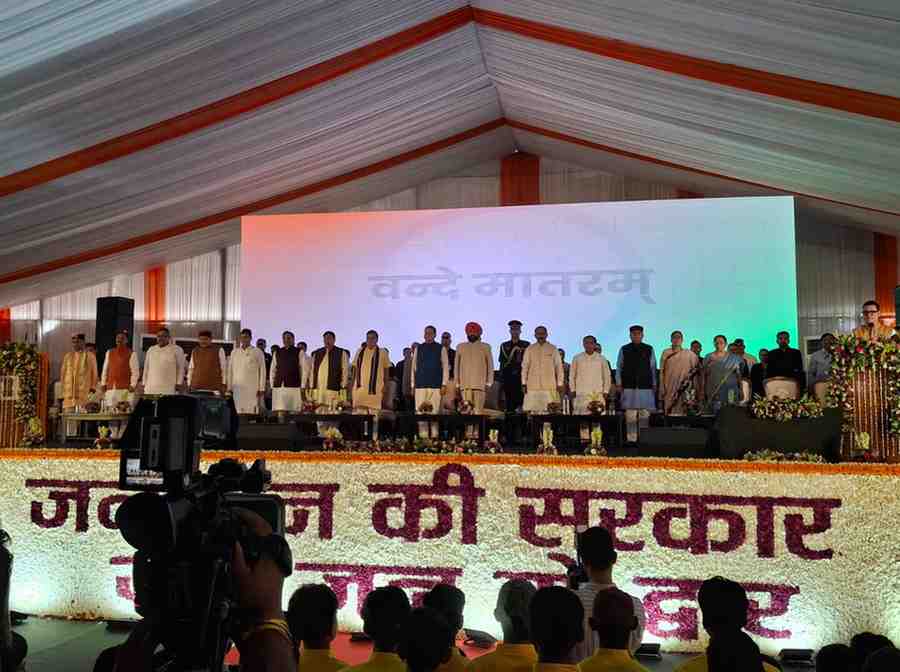
On the occasion, Governor Lieutenant General (Retd.) Gurmit Singh and the Chief Minister inaugurated and laid the foundation stones for 41 development projects worth over ₹289 crore. The Chief Minister said these projects would strengthen Dehradun’s infrastructure and further accelerate the city’s development.
He concluded by saying that the government’s politics is now centred not on power, but on service and results, and reaffirmed that the state government is working with transparency, integrity, and a development-oriented agenda in line with public expectations.