
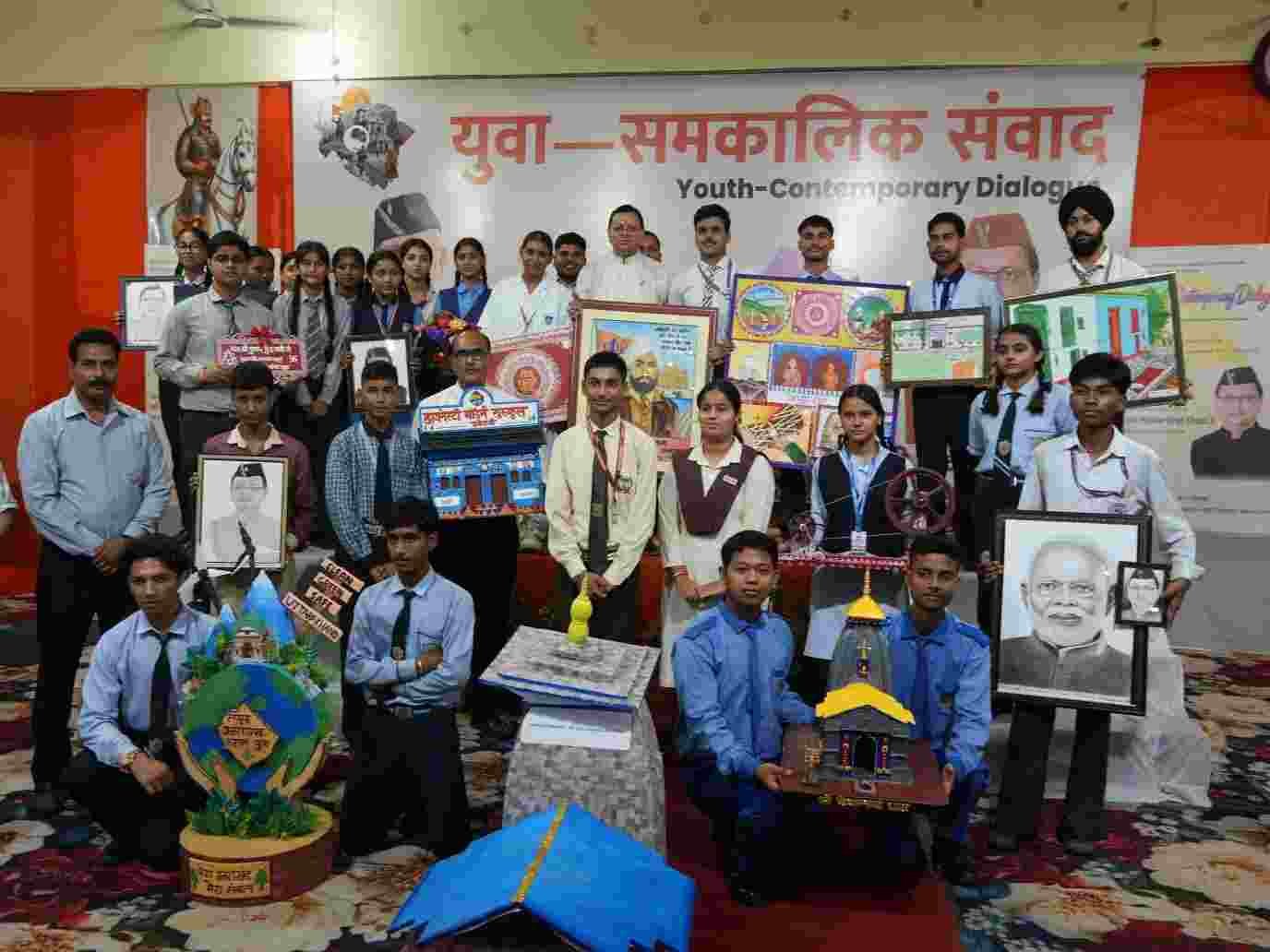
Khatima: Chief Minister Pushkar Singh Dhami on Monday interacted directly with students at the ‘Yuva Samasamayik Samvad’ programme held in Khatima. Around 360 students from various schools asked the Chief Minister candid questions on issues including employment, education, tourism, environment, science and technology, and disaster management.
The Chief Minister said the state government was following a zero-tolerance policy against corruption. He urged young people to report if anyone demands a bribe or exerts undue pressure to get work done. Complaints can be lodged through the toll-free number 1064 or other designated channels. He assured that the identity of complainants would be kept confidential and that complaints would be investigated and acted upon promptly.
The Chief Minister said the government was working with an “unwavering resolve” to make Uttarakhand one of the leading states in the country. His objective, he said, was to ensure that young people do not have to leave the state in search of better education, employment and skill-development opportunities. He stated that around 34,000 young people had so far been provided government jobs.
Speaking about border areas, the Chief Minister said these regions were being developed not as the “last frontier” of the country but as the “first villages” and “first regions.” The government is paying special attention to improving electricity, water, roads, healthcare and education facilities, along with creating more local employment opportunities.
On tourism, the Chief Minister said improved road and air connectivity and the expansion of homestay facilities had given tourism in Uttarakhand a fresh boost. Tourist numbers have increased in areas such as Champawat, Munsiyari, Kausani, Berinag, Chaukori, Panchachuli and Adi Kailash. He claimed that the annual number of tourists visiting the state has crossed 70–80 million.
On balancing development and environmental conservation, the Chief Minister said Uttarakhand’s natural wealth was its greatest heritage and that environmental protection was being given equal priority alongside development. Representatives and officials were also present at the programme, which was attended by students from 18 schools.