
Dehradun: Significant consensus has been reached toward resolving pending asset division disputes between Uttar Pradesh and Uttarakhand. Nearly 26 years after the formation of the state, disputes concerning assets valued at over ₹20,000 crore have been settled between the two states, with an agreement to resolve the remaining cases through mutual consent.
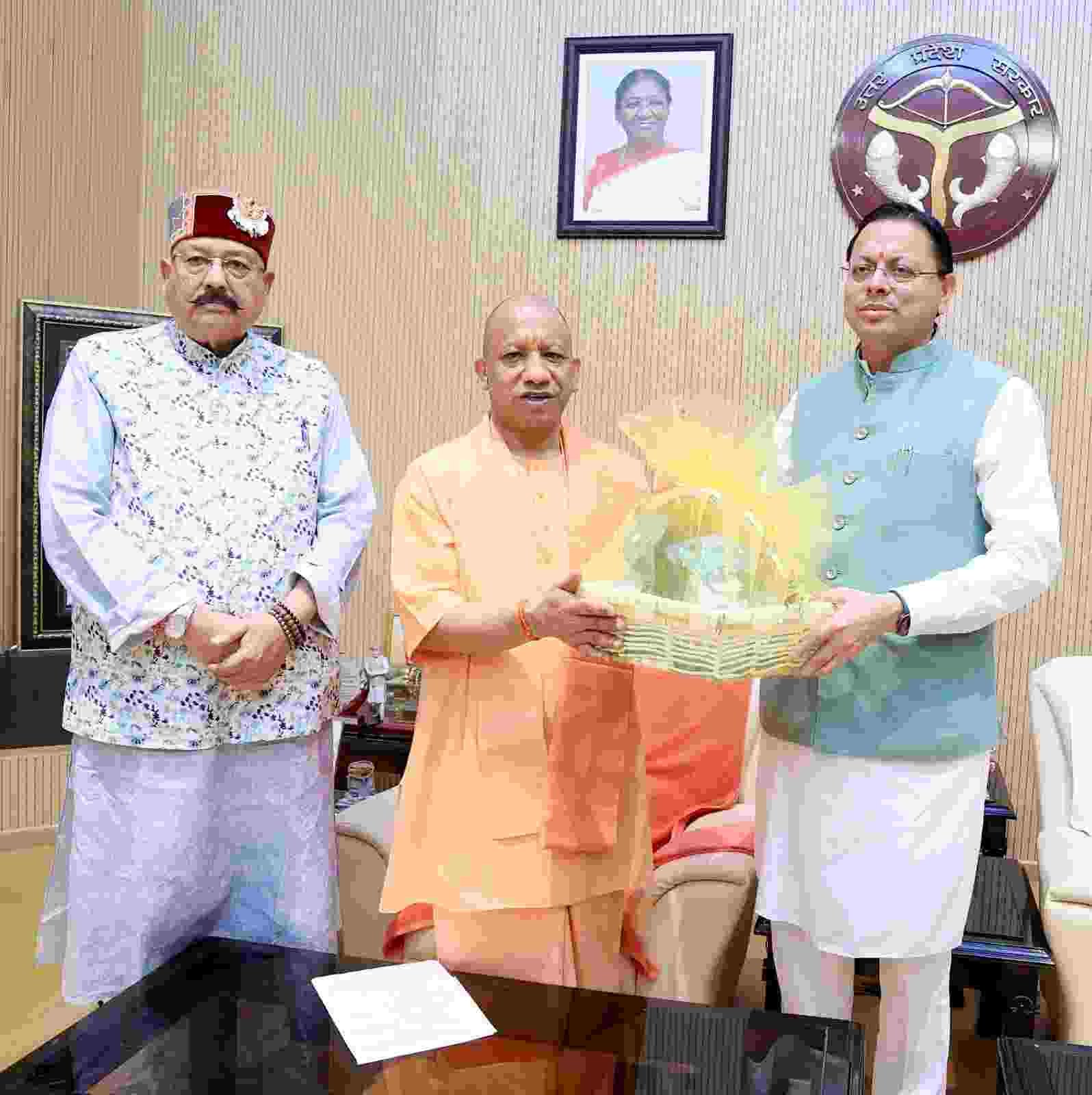
Chief Minister Pushkar Singh Dhami and Irrigation Minister Satpal Maharaj met Uttar Pradesh Chief Minister Yogi Adityanath in Lucknow to discuss asset division and pending Irrigation Department matters. According to Satpal Maharaj, mutual cooperation and coordination have led to the resolution of several key cases, though government orders (shasanadesh) are still pending issuance for a few matters.
The meeting discussed the transfer of a total of 659.5 hectares of land, including 615 hectares in Haridwar district, 32 hectares in Champawat, and 12.5 hectares in Udham Singh Nagar. Additionally, Uttar Pradesh has agreed to the transfer of 609 government buildings—comprising 429 residential and 180 non-residential buildings—for which final transfer orders are yet to be issued.
The meeting also raised the issue of the proposed Iqbalpur canal system, intended to irrigate about 18,500 hectares of agricultural land across the Bahadrabad, Bhagwanpur, and Narsan development blocks of Haridwar. The approximately 35-kilometer-long canal requires 665 cusecs of water from the Upper Ganga Canal, for which approval from the Uttar Pradesh government is awaited.
The condition of the Khatima Barrage in Udham Singh Nagar was also discussed. The Irrigation Minister informed that the barrage has completed its designated lifespan and requires new construction given its current state; a proposal regarding this has been placed before the Uttar Pradesh government.
Satpal Maharaj also highlighted concerns regarding maintenance issues and potential encroachments caused by delays in asset transfers. He stated that while some issues can be resolved soon, others require further dialogue between the two states, adding that matters easily resolvable at the departmental level will be given priority.