
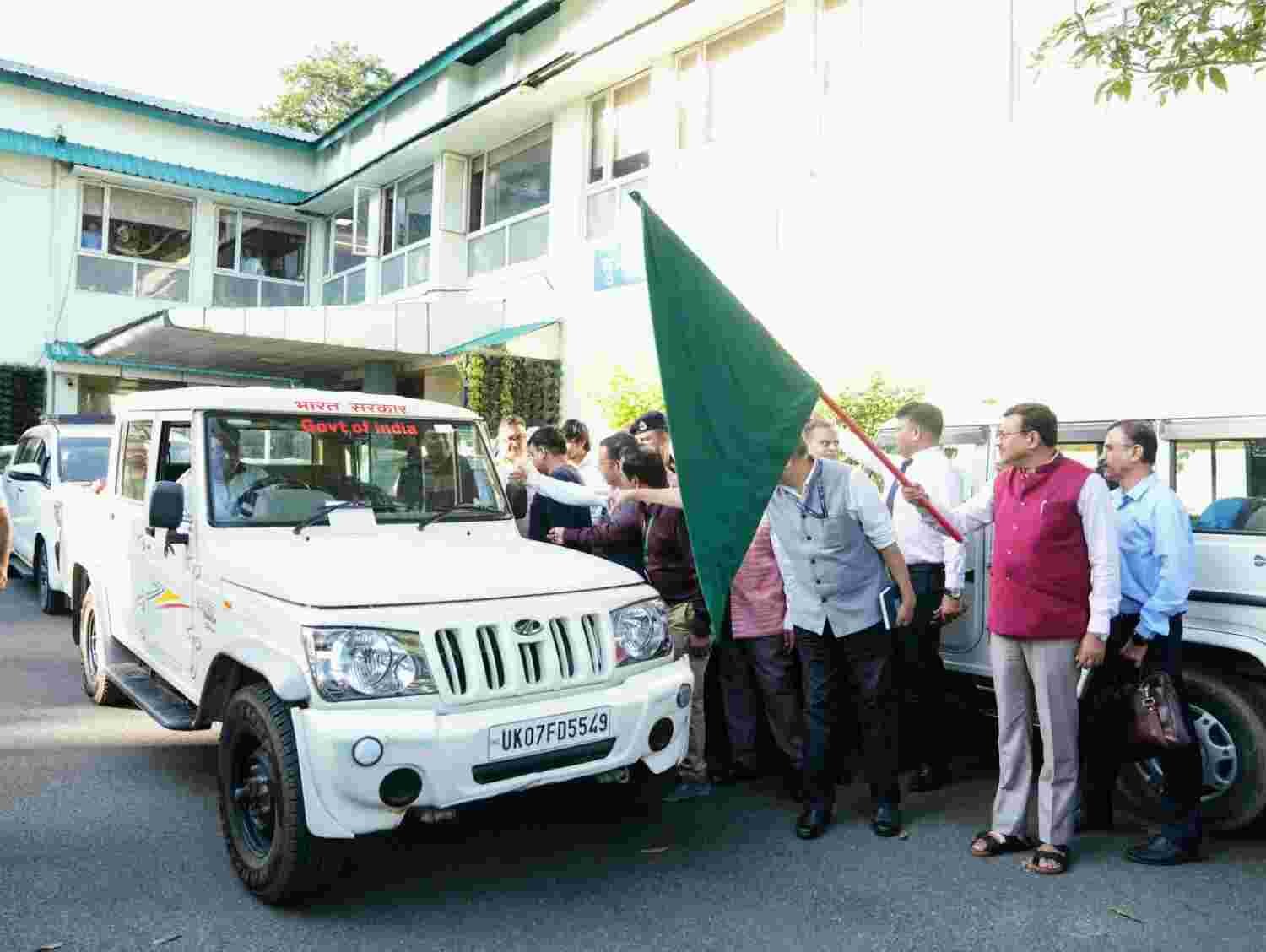
Dehradun. A significant initiative has begun in Uttarakhand to mitigate the potential threat of Glacial Lake Outburst Floods (GLOF) and strengthen the monitoring of lakes in high-altitude Himalayan regions. The establishment of an early warning system for glacial lakes in the state is commencing at Vasundhara Tal in Chamoli district. Chief Secretary Anand Bardhan flagged off a team of scientists and technical experts from the Secretariat on Tuesday.
The Chief Secretary stated that state-of-the-art sensors, satellite communications, and real-time data monitoring will help in understanding changes occurring in glacial lakes. He added that this initiative will prove crucial in mitigating future hazards associated with glacial lakes and conducting scientific risk assessments.
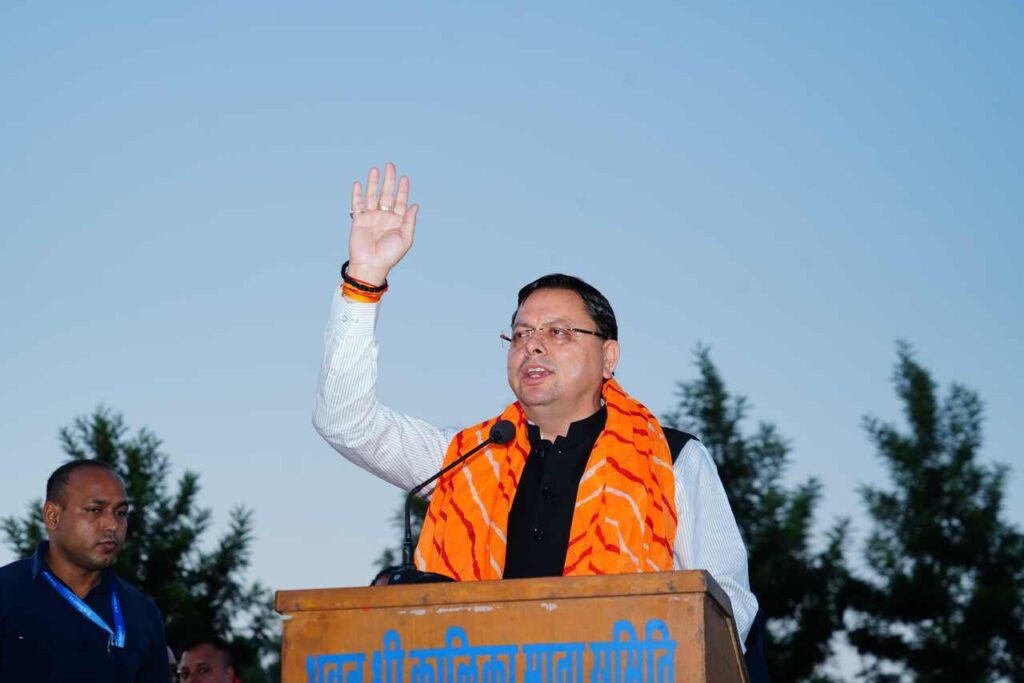
This is the first scientific team deployed to set up an early warning system at Vasundhara Tal. The expedition is proposed from September 29 to October 15. Extending his best wishes to the scientists, experts, and security forces participating in the mission, Chief Minister Pushkar Singh Dhami stated that for Uttarakhand, located in high Himalayan terrain, monitoring glacial lakes and remaining alert to potential risks is of utmost importance. He noted that establishing an early warning system at Vasundhara Tal is a major step toward strengthening the state’s disaster preparedness on scientific and technical foundations.
This campaign is being conducted by the Uttarakhand State Disaster Management Authority under the National Glacial Lake Outburst Flood Risk Mitigation Program. The expedition team includes scientists and technical experts from the Central Building Research Institute (CBRI), Roorkee, and the Wadia Institute of Himalayan Geology, Dehradun. Personnel from the State Disaster Response Force (SDRF), National Disaster Response Force (NDRF), and Indo-Tibetan Border Police (ITBP) will accompany the team for security and field support in the rugged high-altitude terrain.
Sensors to Detect Changes in the Lake
Various sensors will be installed at Vasundhara Tal to monitor water levels, weather, snow depth, subsurface snow temperatures, tilt and vibrations around the lake, and water discharge. To power equipment in this remote terrain, a solar power system will be used, alongside a satellite communication system to transmit data back to the base station. Data loggers and a monitoring dashboard will also be established for data recording and real-time oversight.
Based on the data collected by the sensors, abnormal changes in water level, weather, and other conditions can be identified. If changes exceed set thresholds, the system will issue timely warnings to authorities.
13 Lakes Categorized as High Risk
Secretary of Disaster Management and Rehabilitation, Vinod Kumar Suman, stated that according to 2023 data from the National Remote Sensing Centre, a total of 344 glacial lakes have been identified in Uttarakhand. Among these, 13 lakes have been categorized as high risk—including one in Bageshwar, four in Chamoli, six in Pithoragarh, one in Tehri Garhwal, and one in Uttarkashi.
He informed that scientific surveys regarding depth and water-holding capacity have been completed for six high-risk lakes. These include Saraswati Tal and Vasundhara Tal in Chamoli, Kedartal in Uttarkashi, and Mabang, Pyungru, and SyunkTI Yangti lakes in the Darma Valley of Pithoragarh.
Disaster Risk Reduction a Priority
Disaster Management and Rehabilitation Minister Madan Kaushik stated that strengthening the scientific monitoring of glacial lakes is among the government’s top priorities. He said that critical data such as water level, weather, snow conditions, and water flow will be continuously monitored using modern technology and scientific expertise.
Secretary Vinod Kumar Suman added that potential flooding from glacial lakes poses risks to downstream settlements, roads, bridges, hydroelectric projects, and other vital infrastructure. Hence, the early warning system is being reinforced to identify risks based on scientific data and ensure timely safety and rescue actions.