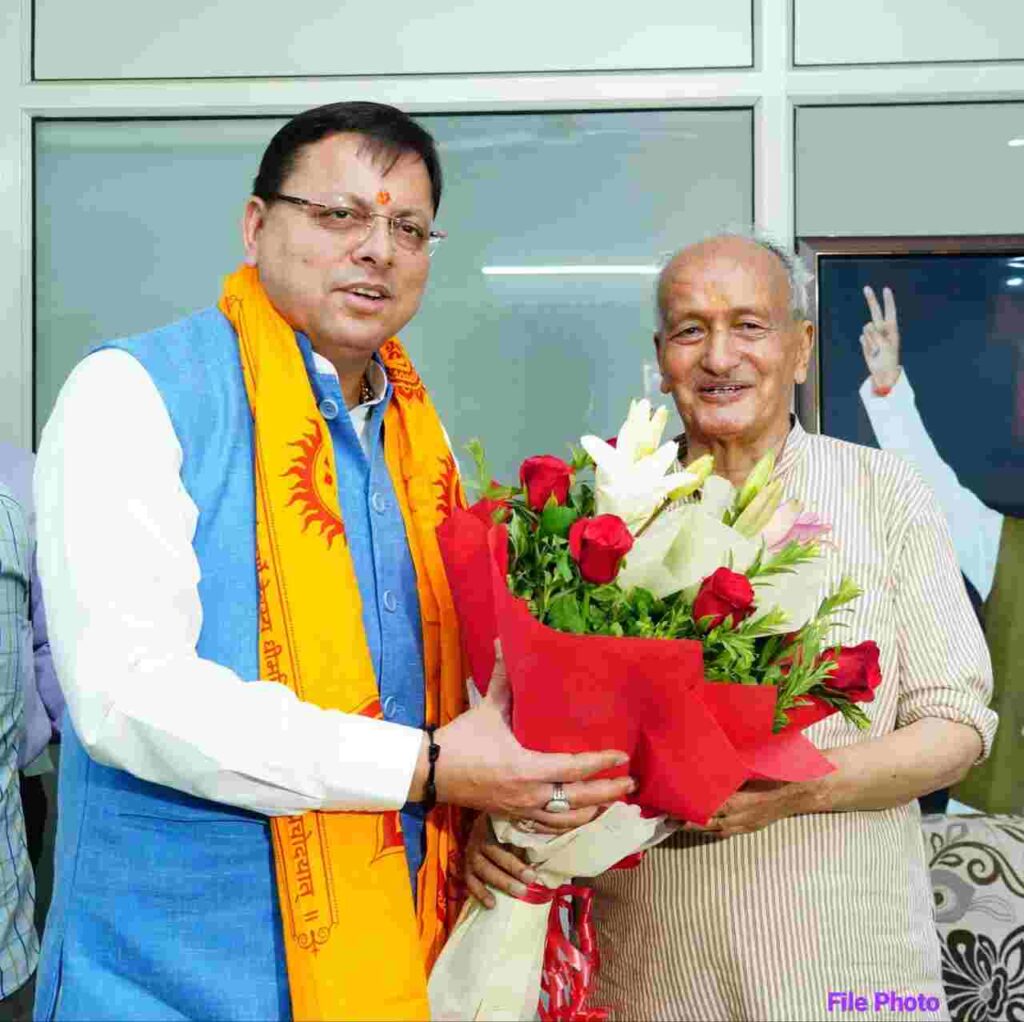

Dehradun: Chief Minister Pushkar Singh Dhami said that the folk culture of Uttarakhand is the soul and identity of the state. The state government is working with full commitment towards the preservation and promotion of folk languages, folk arts, literature and cultural heritage. He said that connecting the younger generation with its cultural roots is a priority of the government.
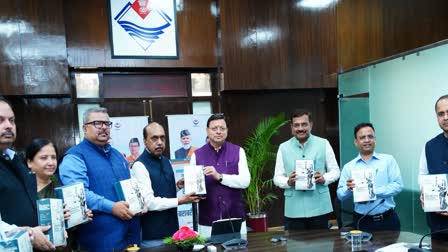
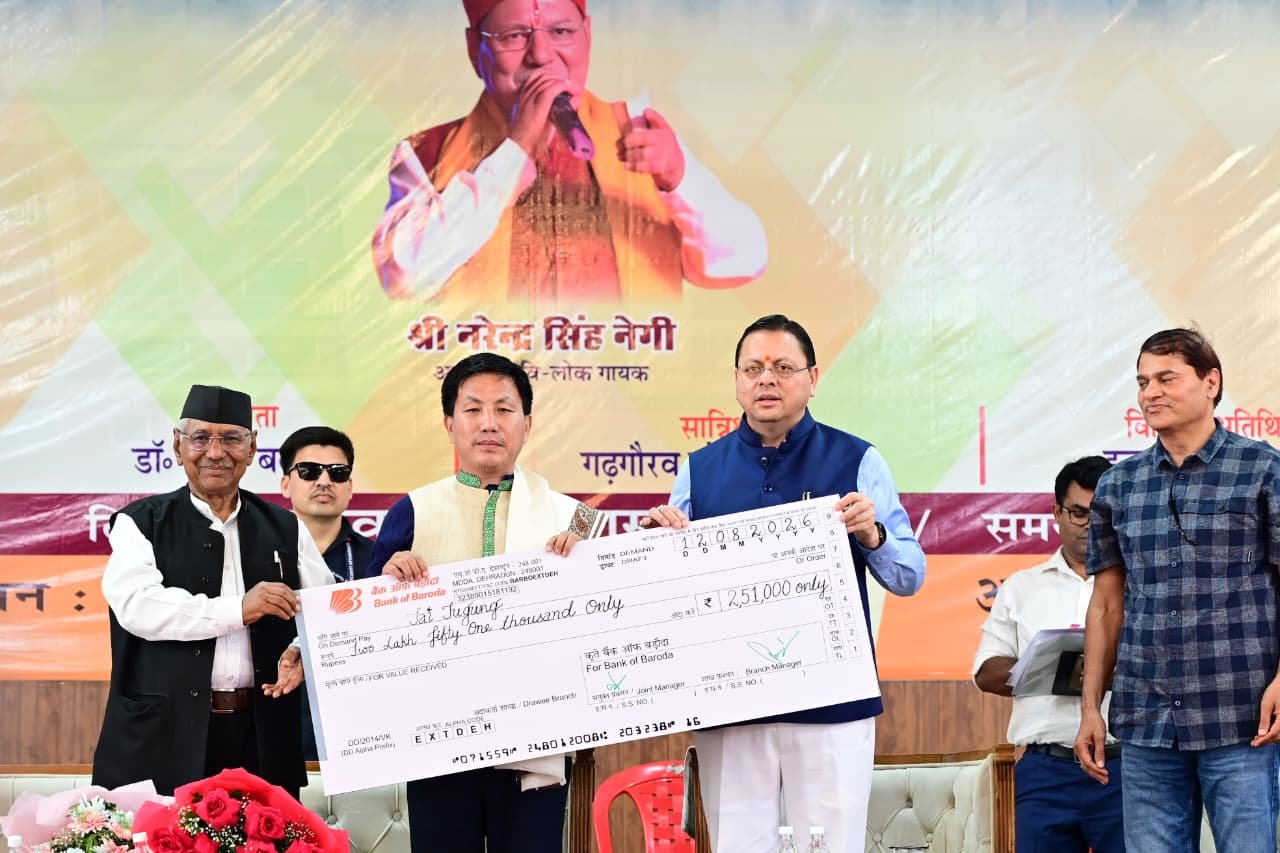
The Chief Minister participated in the ‘Narendra Singh Negi Culture Award Ceremony’ organised at Social Baluni School in Dehradun on the occasion of folk singer Narendra Singh Negi’s birthday. On the occasion, he released the book ‘Mountain Melodies of Narendra Singh Negi’, based on English translations of Narendra Singh Negi’s songs. He also presented the ‘Narendra Singh Negi Culture Award-2026’ to Tai Tugung, an actor, theatre practitioner and playwright from Arunachal Pradesh.
Extending birthday greetings to Narendra Singh Negi, the Chief Minister said that through his songs and music, Negi has given Uttarakhand’s cultural identity a distinctive recognition at the national and international levels. His songs strongly portray the people’s lives, nature, struggles, emotions and social concerns of Uttarakhand.
He said that the culture award named after Narendra Singh Negi is dedicated to personalities who have made notable contributions to culture, literature, art and social causes across the Himalayan states. Through the Nyishi language, Arunachali Hindi, theatre, drama and cinema, Tai Tugung has helped give wider recognition to the folk culture and traditions of Arunachal Pradesh.
The Chief Minister described the release of the book containing English translations of Negi’s songs as an important initiative towards preserving Uttarakhand’s folk language and culture. He said the book would not only introduce future generations to Narendra Singh Negi’s life, personality and musical journey but would also help give Uttarakhand’s cultural heritage global recognition.
Dhami said that traditional forms of folk songs such as Jagar, Beda, Mangal, Khuded and Chopati, along with folk instruments such as Dhol, Damau, Hudka, Mashak, Turri and Bhankora, form the foundation of Uttarakhand’s cultural identity. The government is continuously working to honour and provide opportunities to folk artists while also connecting the younger generation with these traditions.
He said that the process of registering folk artists has been simplified. So far, 275 cultural groups and 226 individual artists have been registered. Eligible artists associated with traditional instruments such as Dhol and Damau are being provided free instruments and costumes every year.
The Chief Minister said that the monthly pension for elderly and economically weaker artists, litterateurs and writers who have dedicated their lives to folk art and literature has been increased from ₹3,000 to ₹6,000. At present, 180 artists are benefiting from the scheme. Six-month training workshops are also being organised to keep the guru-shishya tradition alive.
He said that the ‘Long-Term Literary Service Award’ was introduced in 2025, under which an award amount of ₹5 lakh is provided. Under the ‘Uttarakhand Sahitya Gaurav Samman’, 57 litterateurs writing in different languages have been honoured so far. In addition, the ‘Sahitya Bhushan Award’ has been introduced, carrying an award amount of ₹5.51 lakh. Since 2022, financial grants have also been provided for the publication of books by 102 authors.
The Chief Minister said that efforts are being made to establish Uttarakhand not only as a tourism destination but also as a national centre for literature and culture. Work is progressing rapidly on a plan to develop two ‘Literature Villages’ in the state. These villages will provide facilities such as accommodation for writers, libraries, study centres and seminar venues.
The Chief Minister said that the government is working with an “unwavering resolve” to preserve the state’s rich cultural heritage and folk traditions. He expressed confidence that with the cooperation of society, artists and litterateurs, Uttarakhand’s cultural heritage would become even stronger and richer for future generations.
The ceremony was attended by folk singer Narendra Singh Negi, along with litterateurs, artists, culture enthusiasts, representatives of various cultural organisations and a large number of distinguished citizens.