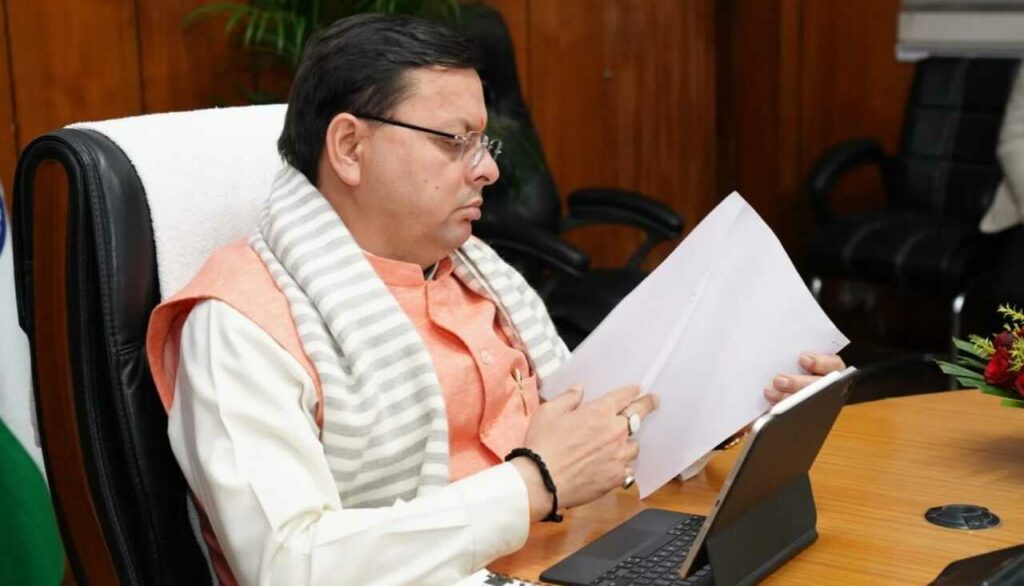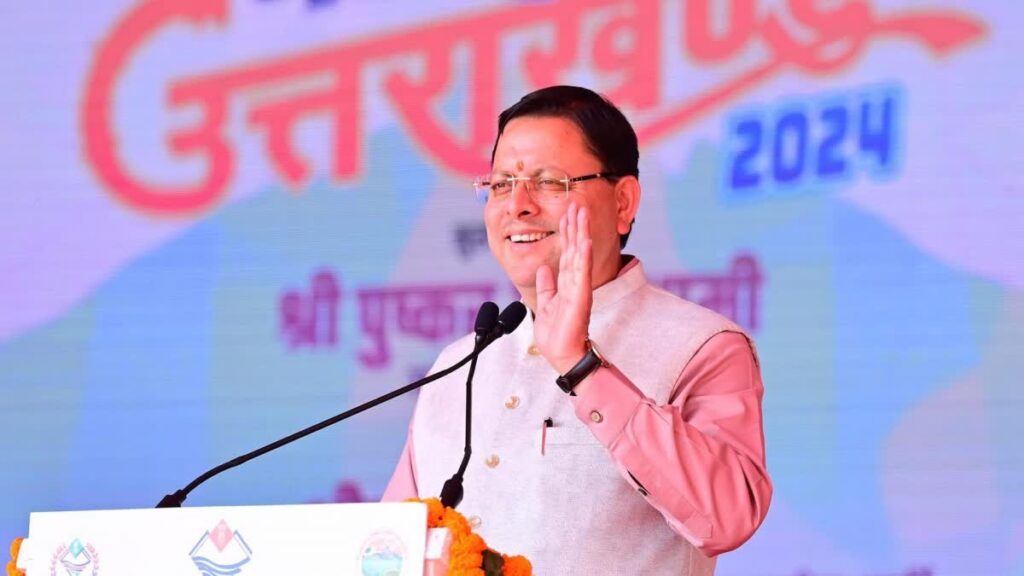

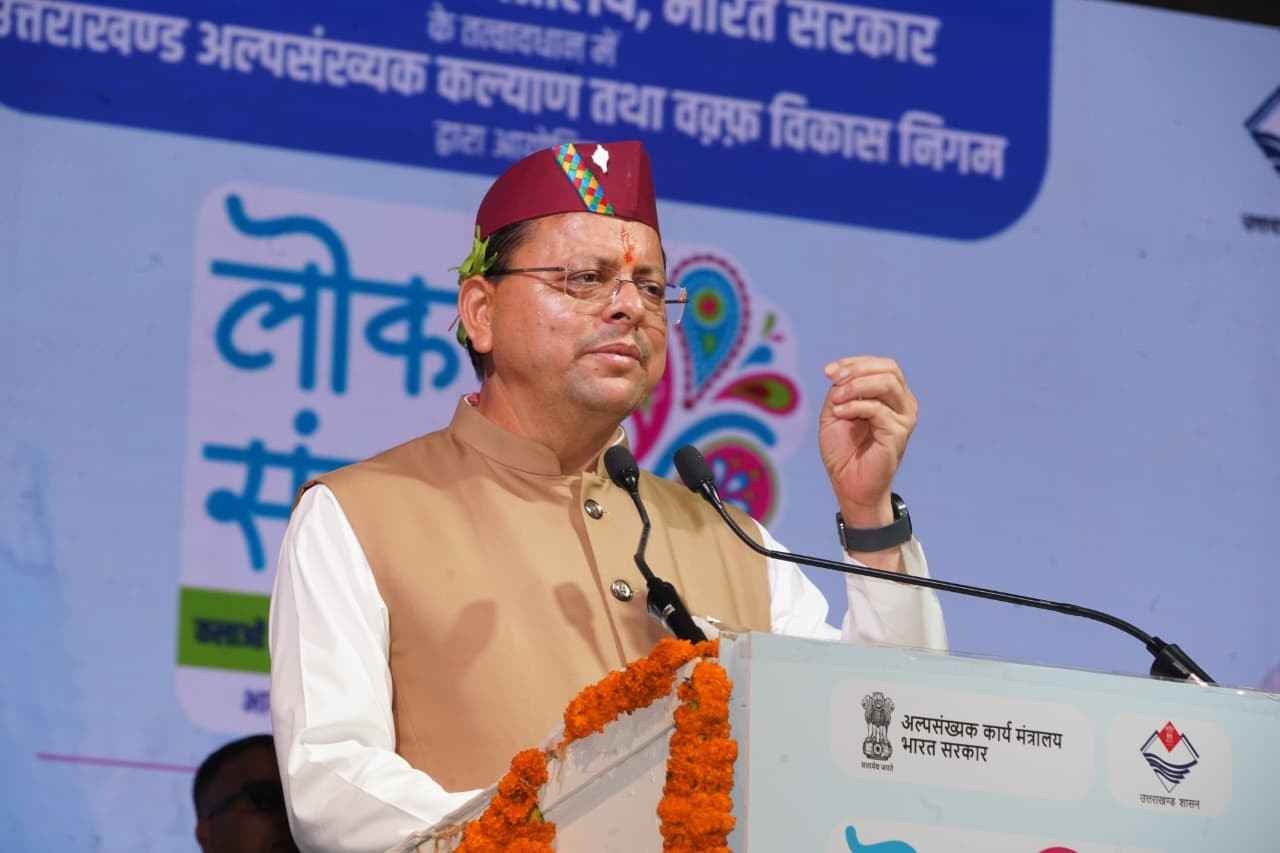
Dehradun: Chief Minister Pushkar Singh Dhami on Thursday participated in the Harela Festival organised under the Lok Sanvardhan Parv at Parade Ground and extended his greetings to the people of the state on the occasion of Harela. He said that Harela is not merely a festival but a people’s movement for nature conservation, environmental protection, social harmony, and preserving Uttarakhand’s rich cultural heritage.
The Chief Minister said that Harela is a folk tradition of Uttarakhand that unites people from all sections of society. He stated that a resolve has been taken to plant one million saplings across the state during this year’s Harela celebrations. Urging people to join Prime Minister Narendra Modi’s “Ek Ped Maa Ke Naam” campaign, he appealed to every citizen to plant a tree in honour of their mother and take responsibility for its protection.
The Chief Minister said that under this campaign, a target of planting 20 million saplings has been set for Uttarakhand, of which nearly 11.5 million have already been planted. He added that maintaining a balance between development and environmental conservation is a priority for the state government, and all initiatives are being undertaken with this vision.
The Chief Minister said that the Lok Sanvardhan Parv serves as an important platform to encourage the state’s folk artists, craftsmen, weavers, and artisans associated with handicrafts. Purchasing local products will not only strengthen their livelihoods but also give a new identity to Uttarakhand’s cultural heritage. He also praised renowned folk singer Narendra Singh Negi, saying that his songs have carried Uttarakhand’s culture and folk traditions to audiences across the country and the world.
The Chief Minister appealed to the people of the state to participate enthusiastically in the Lok Sanvardhan Parv and play an active role in environmental conservation as well as in preserving folk culture and traditions.
On the occasion, Cabinet Minister Khajan Das, Mayor Saurabh Thapliyal, renowned folk singer Narendra Singh Negi, folk artists, craftsmen, public representatives, and a large number of citizens were present.