

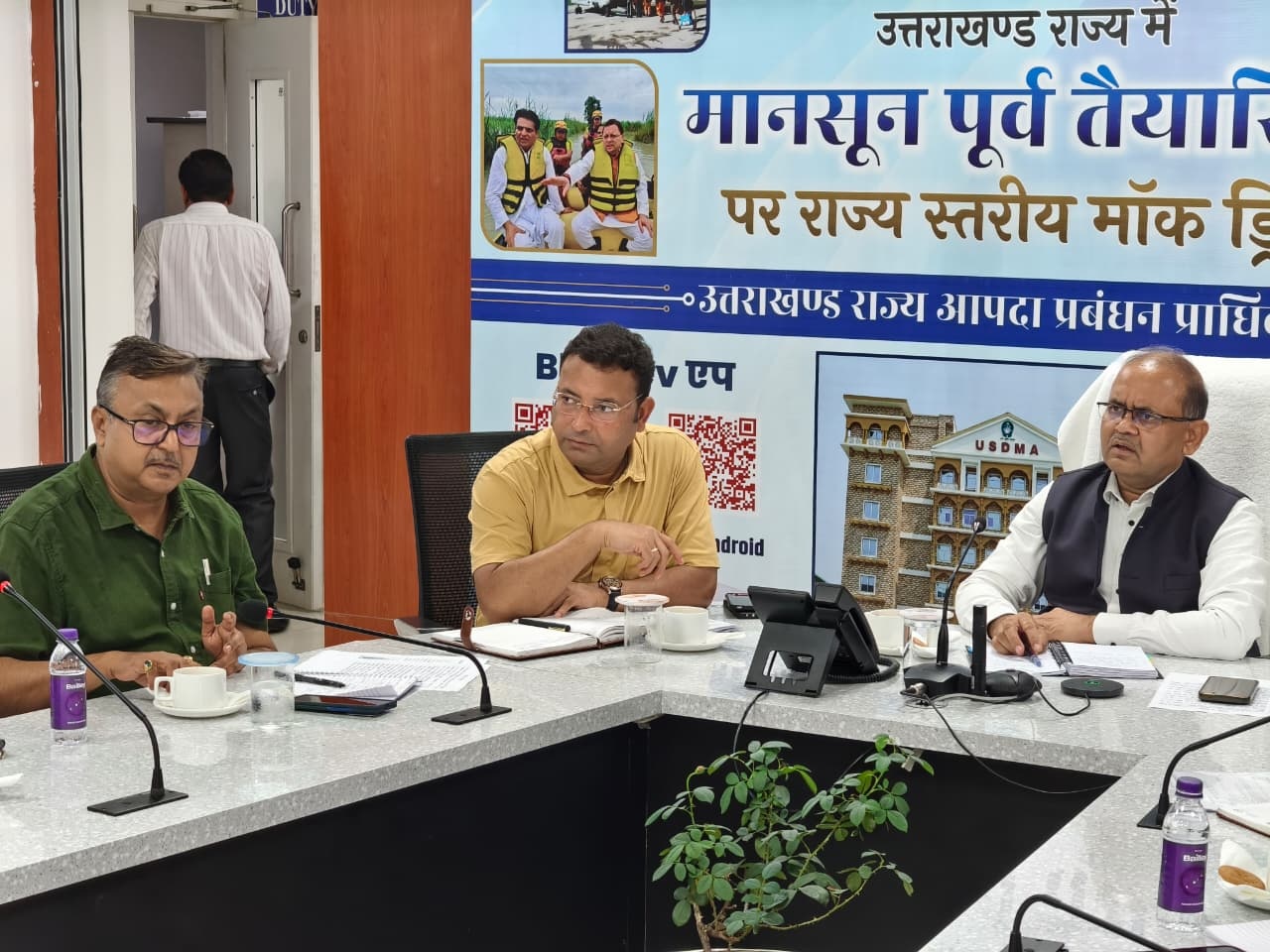
Dehradun: To effectively deal with potential floods and waterlogging during the monsoon, the state government has further tightened the monitoring system for all major dams and barrages. All dam and barrage management authorities must now submit updated reports on reservoir water levels, inflow, outflow, and discharge to the Uttarakhand State Disaster Management Authority (USDMA) every day at 8:00 a.m. and 8:00 p.m. Additionally, before releasing water from any dam or barrage, they must provide a detailed assessment of the likely impact on downstream areas.
Acting on the directions of Chief Minister Pushkar Singh Dhami, Disaster Management and Rehabilitation Secretary Vinod Kumar Suman instructed officials during a high-level review meeting at the State Emergency Operations Centre (SEOC) of USDMA to ensure that advance information is shared with the SEOC and the concerned district administrations before water is released. The information should clearly indicate how long the released water will take to reach different locations, the expected rise in river water levels, and the areas likely to be affected so that timely warnings and precautionary measures can be taken.
Officials also directed all dam and hydropower projects to share real-time data from river level sensors, discharge monitoring systems, and other early warning systems with USDMA through an API. Projects have also been instructed to expand the network of Automatic Weather Stations and early warning systems. Tehri Hydro Power Corporation has been asked to increase the number of Automatic Weather Stations in its operational area to 25.
Secretary Vinod Kumar Suman emphasized that close coordination between upstream and downstream dams and barrages within the same river system is essential. All projects should regularly exchange information related to water levels, rainfall, and discharge to ensure swift and coordinated action during emergencies.
Officials further directed authorities to conduct regular inspections of discharge sirens, warning equipment, and monitoring sensors, promptly rectify technical faults, and ensure the advance deployment of essential machinery and equipment in flood-prone areas. Special emphasis was also placed on maintaining an efficient drainage system to prevent waterlogging in populated areas during heavy rainfall.