
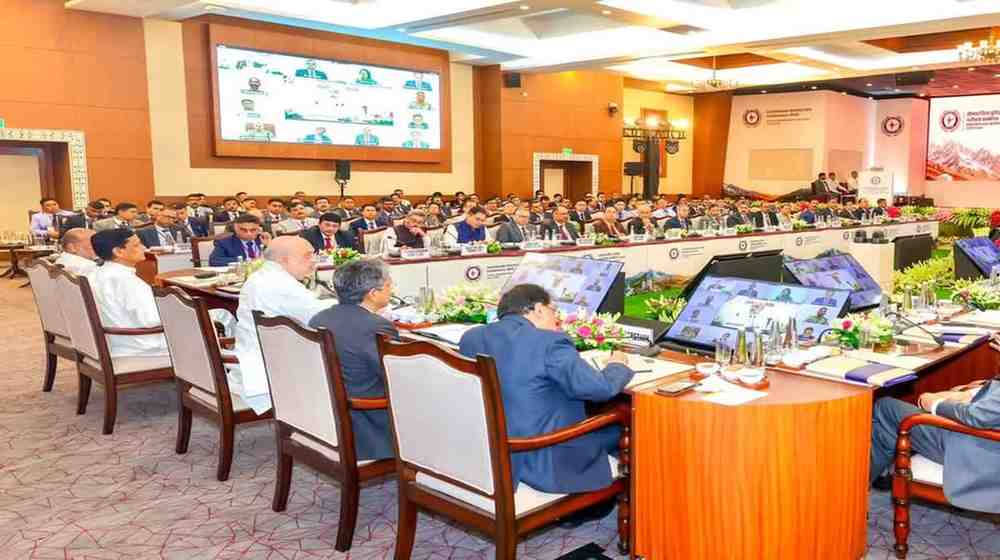
New Delhi/Dehradun: Uttarakhand Police showcased its border security strategy and innovative policing initiatives at the country’s first Land Border District SP Conference 2026, chaired by Union Home Minister Amit Shah in New Delhi. The conference brought together police chiefs and district superintendents from 18 border states and Union Territories.
The Uttarakhand delegation was led by Director General of Police Deepam Seth and included Superintendents of Police from the border districts of Udham Singh Nagar, Pithoragarh, Champawat, Uttarkashi, and Chamoli, which share borders with Nepal and Tibet (China). Home Secretary Shailesh Bagauli, Director General (Intelligence and Security) Abhinav Kumar, and other senior officials participated virtually.
The conference featured detailed discussions on issues including cross-border terrorism, organised crime, financial crimes, illicit financial flows, demographic changes, and the development of border regions. Uttarakhand Police presented recommendations on technology-driven border surveillance, strengthening local intelligence networks, preventing cross-border crimes, and improving coordination among various security agencies.
During a session on “Community Engagement for Border Development,” Champawat Superintendent of Police Rekha Yadav presented Uttarakhand Police’s community policing model. She explained the concept of the “Five Pillars of Community Force Multiplication”—Trust, Information, Participation, Capacity Building, and Encouragement & Protection. She also highlighted the “Ratri Chaupal” outreach programme in border villages and showcased the Gunji Model in Pithoragarh as a successful example of promoting reverse migration.
Addressing the conference, Union Home Minister Amit Shah said the Central Government is committed to modernising and strengthening border security under the “Smart Border” concept. He emphasised that a robust security framework is being developed through close coordination among border guarding forces, state governments, district administrations, and local communities.