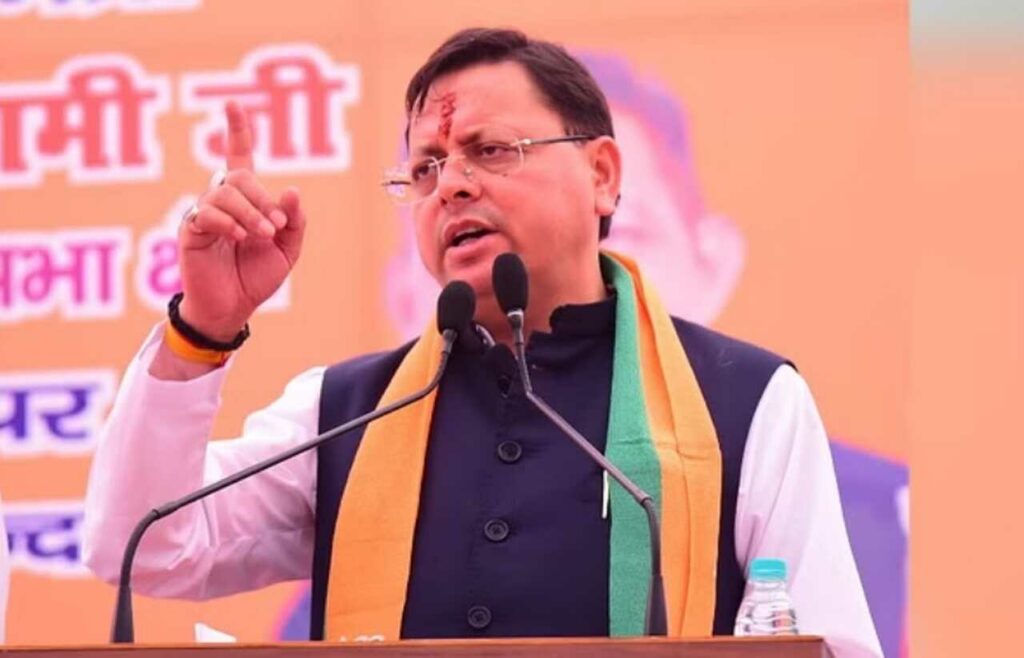

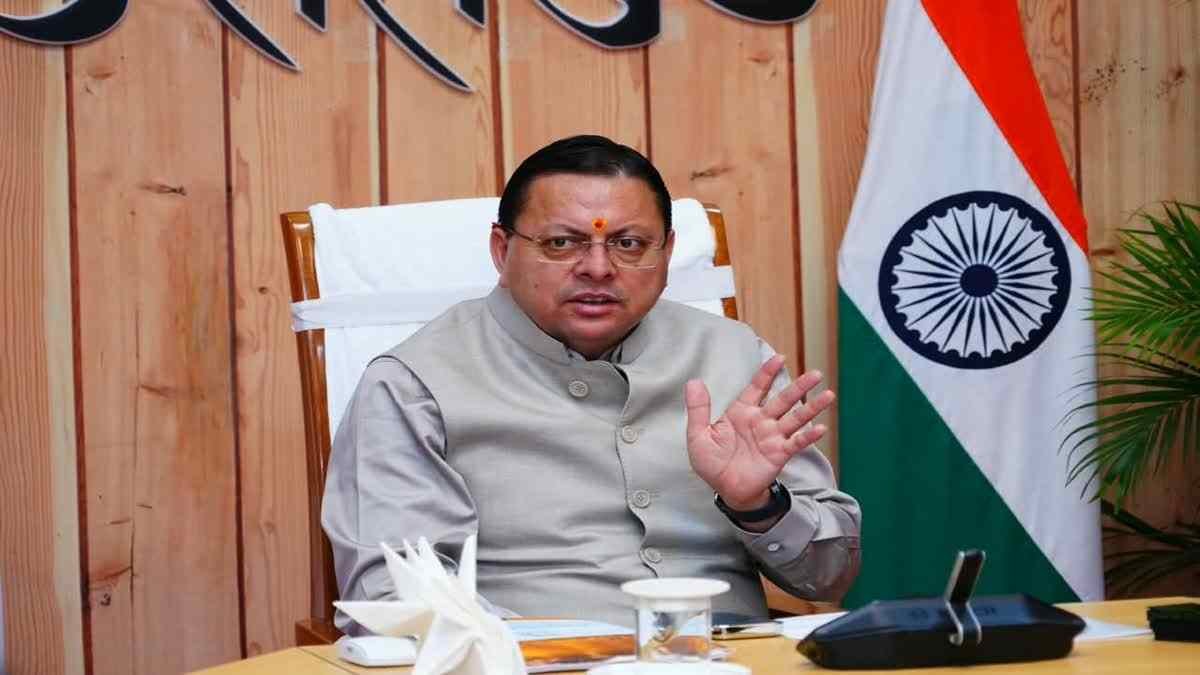
Dehradun. Chief Minister Pushkar Singh Dhami held a meeting at the Chief Minister’s Residence on Saturday with Prof. Ajay Sood, Principal Scientific Adviser to the Prime Minister’s Office, alongside experts from various scientific and technical institutions. During the meeting, the Chief Minister released the Uttarakhand Science, Technology, and Innovation Policy-2026. Additionally, the technical reports related to the Gross Environment Product (GEP) for the financial years 2023–24 and 2024–25 were also issued.
Detailed discussions took place with experts regarding various aspects of the Gross Environment Product technical report. The Chief Minister issued directives to integrate carbon credits into the policy and to make rainwater harvesting simple and accessible for ordinary citizens.
Economic Assessment of Natural Resources
The Chief Minister stated that through Gross Environment Product, a scientific and economic evaluation of the state’s natural resources and environmental service contributions can be conducted. This will help effectively incorporate the value of forests, water resources, biodiversity, soil conservation, carbon sequestration, and other natural resources into developmental plans and policies.
He noted that Uttarakhand possesses unique geographical and environmental conditions. Therefore, a model tailored specifically to the state’s local circumstances, requirements, and resources should be developed.
Directives to Include Carbon Credits in Policy
The Chief Minister emphasized that the Himalayas, forests, water sources, rivers, and biodiversity are Uttarakhand’s core strengths. Along with their conservation, it is essential to promote the local economy, livelihoods, and sustainable development.
He instructed that carbon credits be explicitly incorporated into the Science, Technology, and Innovation Policy-2026. He also called for special focus on providing a scientific and technical foundation for efforts related to carbon sequestration, forest conservation, and environmental services.
Rainwater Harvesting for Every Household
CM Dhami laid strong emphasis on making rainwater harvesting accessible to ordinary citizens. He stated that it should not remain restricted to large projects or institutional setups. Simple, low-cost technical models compatible with local conditions should be designed so that people can easily adopt them in their homes and surrounding areas.
Balance Between Development and Environment Essential
The Chief Minister affirmed that establishing a balance between development and environment while conserving natural resources is vital. While formulating development schemes, the capacity of natural resources, environmental sensitivity, and local conditions must be kept in view.
He added that the scientific evaluation of environmental resources and their services through GEP can serve as a valuable foundation for state development plans. Community participation and livelihood creation should also be linked with the conservation of natural resources.
Focus on Addressing Himalayan Challenges
The Science, Technology, and Innovation Policy-2026 prioritizes glaciology, natural disaster management, energy, water resources, agriculture, health, education, migration, skill development, entrepreneurship, intellectual property, and innovation.
Under the policy, goals have been set to strengthen research and development (R&D) institutions and innovation centers while building an effective ecosystem for scientific research. Technical advancements in infrastructure, energy, agriculture, health, education, and employment will be driven in alignment with the specific needs of both hilly and plain areas.
The Chief Minister asserted that the objective of science, technology, and innovation must be to address local needs and bring meaningful, positive transformation to people’s lives.
The meeting was attended by Prof. Shiv Kumar (CEO, National Research Foundation), Dr. Parminder Maini (Senior Scientist), Dr. Anil Prakash Joshi (Founder, Himalayan Environment Studies and Conservation Organisation), Prof. K.K. Pant (Director, IIT Roorkee), Prof. Durgesh Pant (Director General, UCOST), academician Dr. Reema Pant, Surendra Singh Manral, and Dr. Vipin Sati.