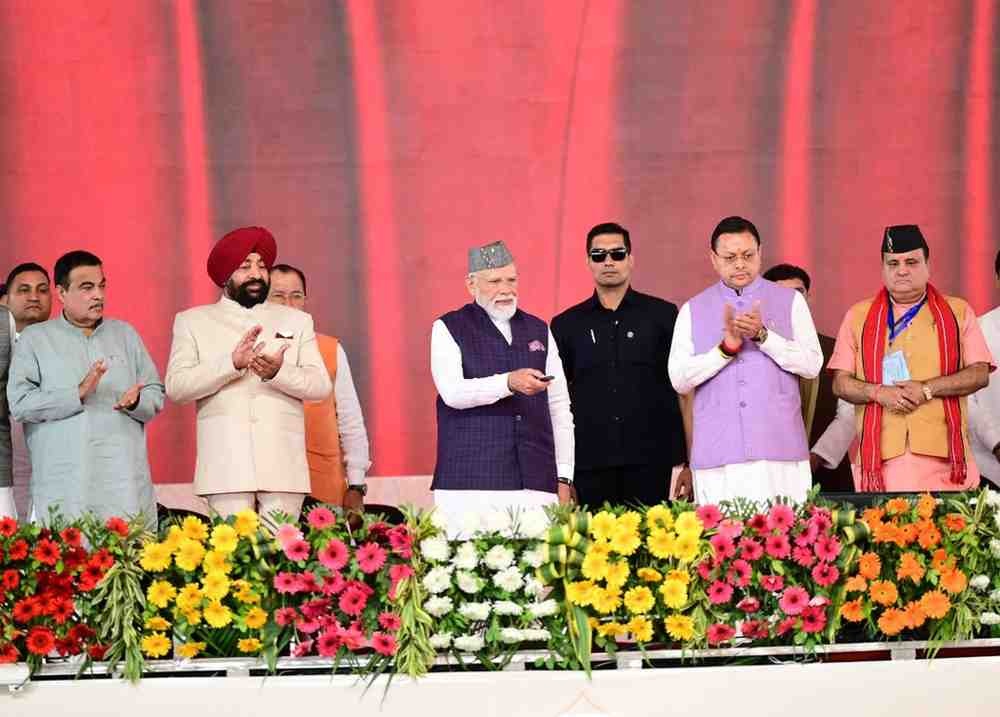


Dehradun: Union Minister for Minority Affairs Kiren Rijiju praised Uttarakhand’s newly implemented Minority Education Act, saying the initiative taken by the government led by Chief Minister Pushkar Singh Dhami could serve as a model for other states.
Speaking to journalists during the Lok Samvardhan Parv in Dehradun, Rijiju said the new system would ensure that minority educational institutions function according to prescribed standards. He emphasized that the government’s objective is to provide equal and quality education to children from all communities, based on the principle of justice rather than appeasement.
Under the new framework, which came into effect on 1 July 2026, all minority educational institutions, including madrasas, must obtain recognition from the Uttarakhand Minority Education Authority, replacing the earlier Madarsa Board system. The state’s 452 registered madrasas, with around 50,000 students, are required to meet the Education Department’s standards. So far, 158 madrasas have applied for recognition, while nine minority educational institutions have already received approval.
The new academic structure provides for a dual-shift system. The morning session will focus on modern subjects such as Hindi, English, Mathematics, Science, and Computer Studies, while the second session will include religious education along with the Constitution, human rights, national unity, and moral values. Students of institutions that meet the prescribed standards will also receive certificates issued by the State Education Board.
Praising Chief Minister Dhami, Rijiju said the state had taken an important step toward education reform. While he clarified that no decision had yet been taken to implement the same system nationwide, he said Uttarakhand’s successful model could serve as a guiding example for other states in the future.